
OCD SUPPORT
Behind the obsessive thought is a fear. And it's not what you think it is.
OCD is a dysfunctional coping mechanism. It tries to protect you from unbearable feelings by keeping you stuck in loops.
But when you uncover the core fears behind the obsession, the compulsion starts to make sense.
And when you rewrite the beliefs driving it, OCD loses its grip.
The fear fades. The thought becomes just a thought. And you get to choose something new.
New thought, same wound.
That thought. That image. That urge.
OCD doesn’t stop at the surface, it digs until it hits your identity.
It’s not really about the intrusive thought “Did I run someone over?”, “Am I faking loving my partner?”, “What if I hurt my child?”, “What if I’m a pedofile?”.
Most people try to fight the content of the thought, but that just feeds the loop. And even with exposure therapy, if you’ve noticed that the theme often jumps to something else. You’re not alone.
The deeper question to ask is.
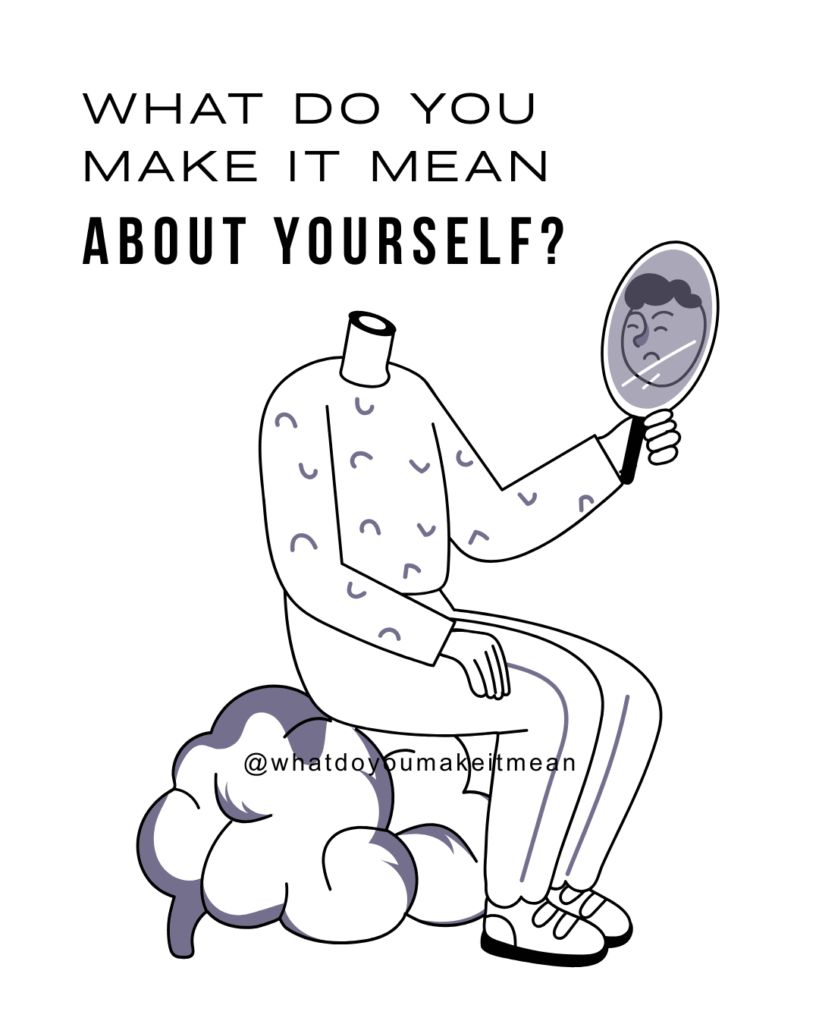
What do you make the thought mean about you?
Obsessive thoughts shift to something else because the core belief underneath hasn’t changed.
Until you rewrite the belief at the root, OCD might keep finding new stories to tell.
What are Core fears?
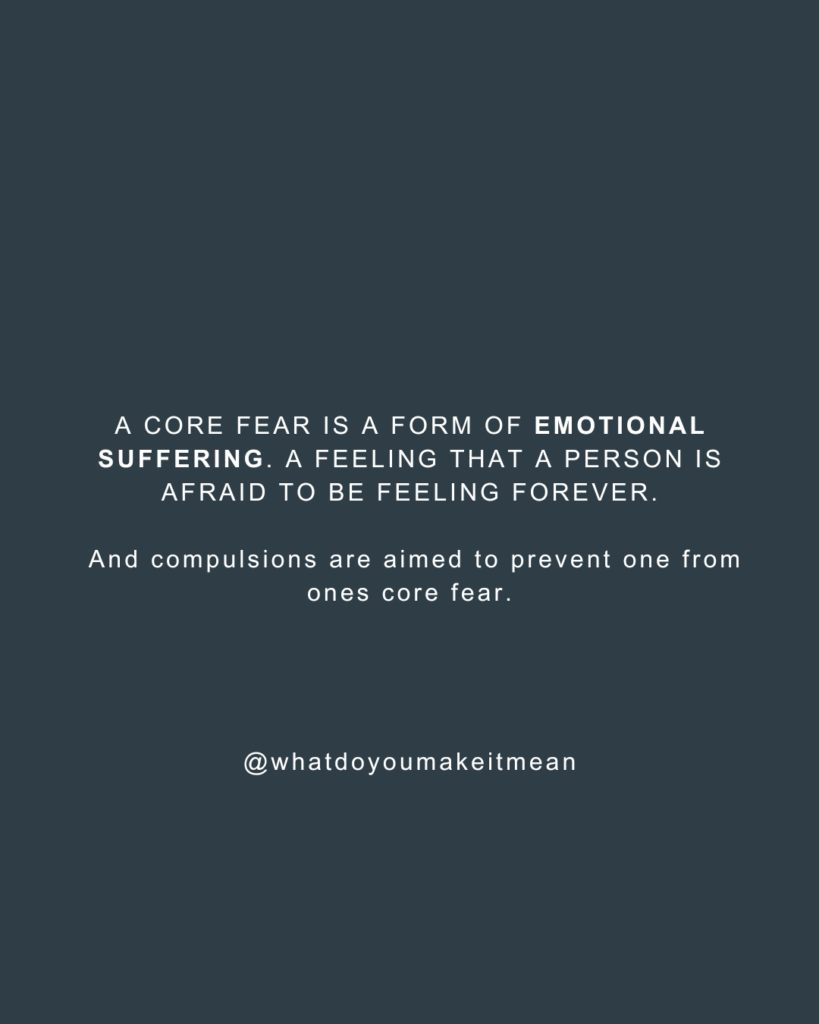
Core fears are deep emotional wounds that we usually get from childhood. But core wounds can also form later in life through repetitive emotional situations that wire our subconscious mind.
They’re often subconscious, and they sound like:
“I’ll be abandoned”
“I’m defective”
“I’m unsafe”
“I’m weak”
“I’m bad”
“I’m trapped”
When we don’t have the knowledge of how or the capacity to emotionally regulate negative emotions in a healthy way, our body does what it can to keep us safe. OCD tries to keep us from feeling our core fears by trying to soothe through compulsions.
Do you know the limiting beliefs that are driving your OCD?
Download this free worksheet to figure out your core fears ⬇
Understanding your core fears is helpful in multiple ways.
It’s not just insight but a shift in the entire recovery process.
➔ You stop seeing OCD as you and start seeing it as a strategy, a defence mechanism trying to keep you safe from emotional pain.
➔ Exposure work becomes clearer. You know what “risk” you’re actually facing, not just the surface fear, but the emotional one underneath.
➔ And when you work directly with the core fear, it might speed up recovery by building emotional resilience and learning new healthy strategies to process negative emotions.
I've been there.
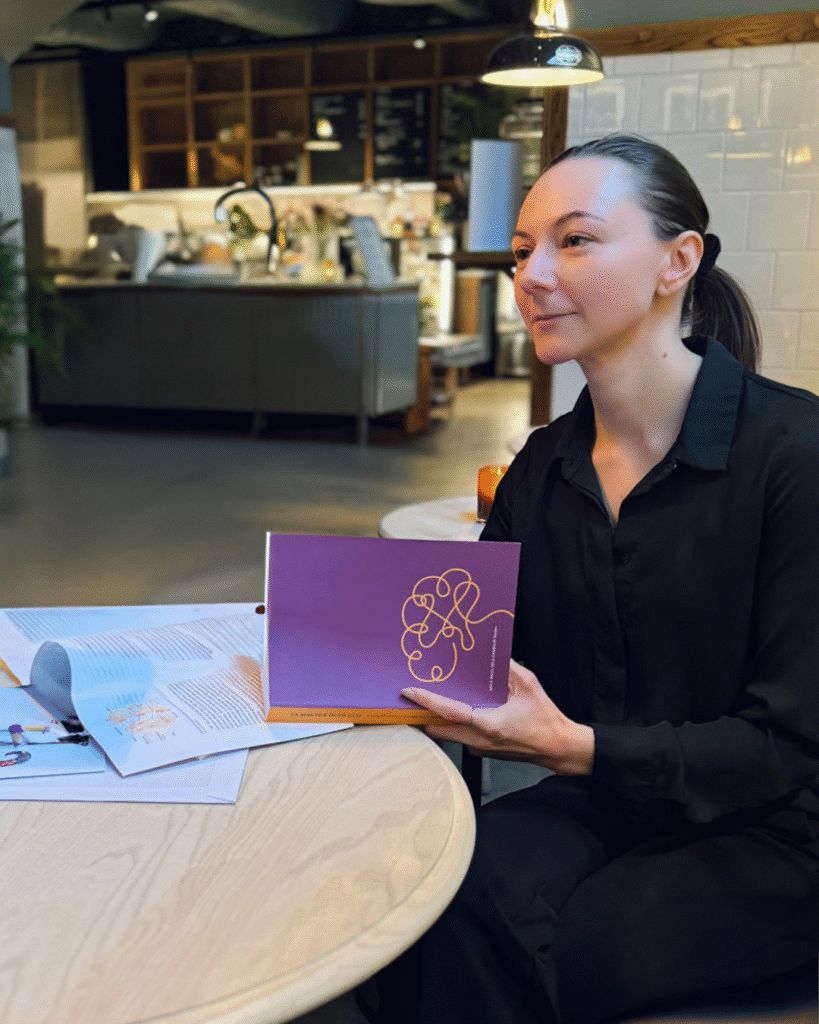
I know OCD from the inside. I lived with it for over two decades, being stuck, exhausted and suffering in silence. And for a long time, I did what most people do: I fought the thoughts. I did the compulsions. I tried to logic my way out.
Exposure therapy helped. But something was still missing. The themes kept jumping. And I felt like I was just putting out fires. This couldn’t be it.
With a background in cognitive neuroscience and applied positive psychology, I started looking beneath the thoughts, the exposures – into the fears, the beliefs, the emotional patterns. I found Integrated Attachment Theory and began using it alongside ERP. I adapted the tools to be effective for someone with OCD and worked with the beliefs that OCD was protecting through subconscious reprogramming, emotional regulation and somatic processing.
Slowly, the themes stopped shifting. OCD was not the center of my life anymore and I saw it for what it actually is, a dysfunctional defence mechanism. I now look at it with compassion, this was the only way my body knew how to soothe from the underlying core fears.
Now I support others through their recovery.
Because OCD isn’t who you are. It’s a strategy, one your nervous system learned to survive what felt emotionally unbearable. My work is about untangling that strategy. Rewriting the beliefs underneath. And learning how to trust yourself again.
Start working on your core fears
Download this free worksheet to figure out your core fears ⬇
Workshop
Core Fears & Subconscious reprogramming.
You’ll learn how to identify your core fears, reprogram limiting beliefs, and build self-trust.
1:1 coaching
You don’t have to navigate OCD alone. We’ll together explore the subconscious patterns keeping you stuck.